Story

Changmin Lee
My Story
Story
"How does AI learn like humans?"
My academic journey began with this fundamental question. While leading the academic club BAMBOO, I explored the principles of AI with my peers. Through various projects, I realized that many AI methodologies mimic the principles of nature and life, much like how the human visual cortex inspired CNNs.
This insight led me to Brain Decoding. I realized that a deep understanding of the brain could be the breakthrough for next-generation AI. Now, I aim to realize the "AI-to-Brain" paradigm—using advanced AI models not just to mimic the brain, but to understand it.
Vision
Research Vision
Vision
"From Brain-to-AI, Towards AI-to-Brain"
I aim to go beyond simply creating AI that mimics the brain.
My ultimate goal is to use highly advanced AI models as a 'microscope' or 'simulator'
to inversely explore the human brain, formulating new scientific questions and finding answers.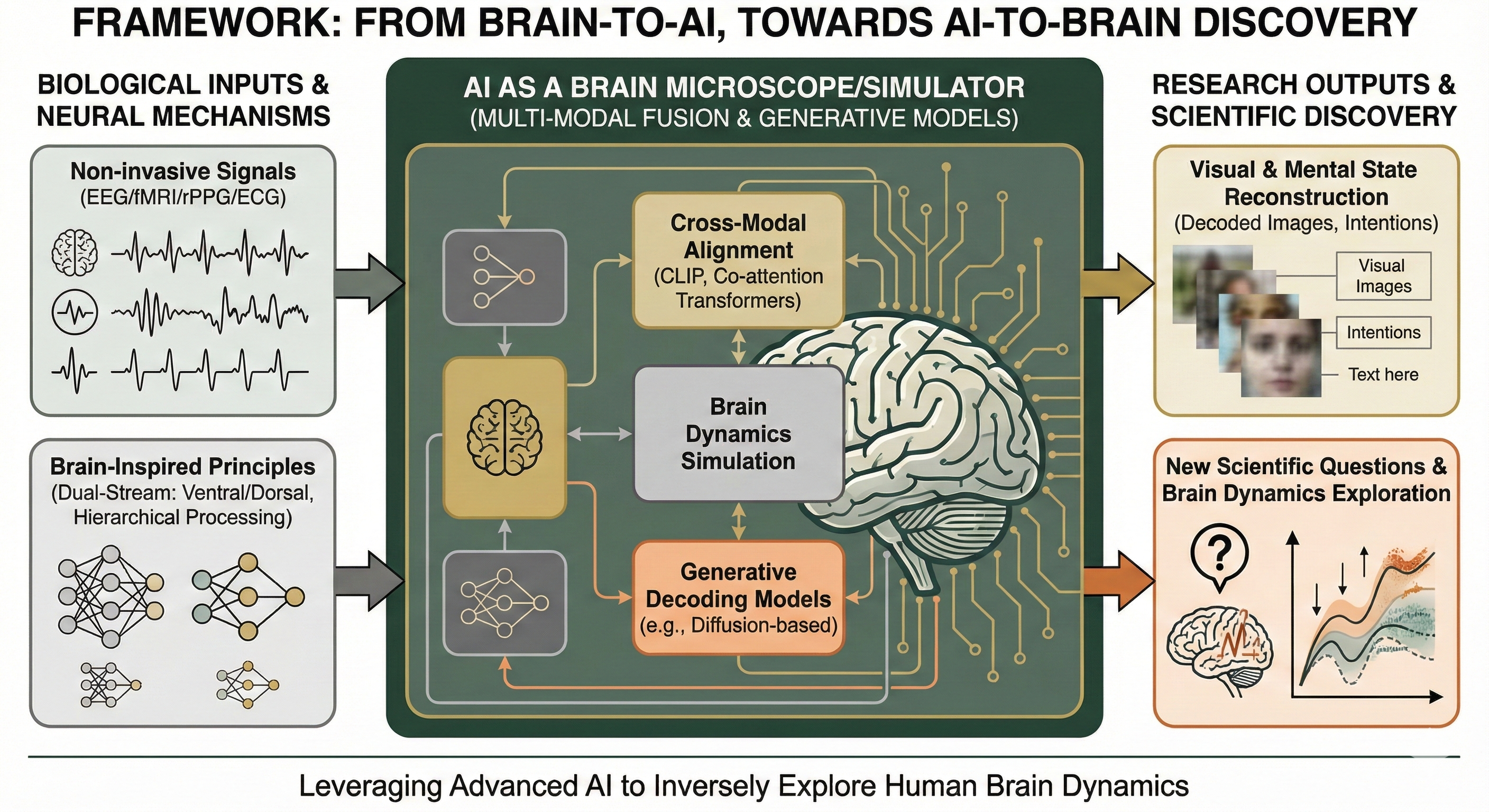
Figure 1. Proposed Research Framework: Leveraging Advanced AI to Explore Human Brain Dynamics
Interests
Research Interests
My research goal is to internalize the brain's computational principles into AI models and use them to explore the brain again.
Brain-Inspired AI
Developing AI architectures inspired by neural mechanisms, such as the dual-stream visual pathways (ventral/dorsal) and hierarchical processing.
Brain-Computer Interface
Decoding human intentions and visual experiences from non-invasive signals (EEG, fMRI). Building practical BCI systems for reconstruction.
Multi-modal Learning
Integrating various modalities—vision, language, and physiological signals—to create comprehensive AI models (e.g., EEG-fMRI fusion).